Everything’s Fine, but are we moving the ball forward?
A client story about the status quo.
One of the first clients Chicago Water Treaters signed on was not a building having lots of problems. The concern was the overall package.
“We’re seeing a different face what’s feels like every month”
“Does this seem like enough tests”
“We haven’t done anything different in forever”
“I just don’t know if someone is really paying attention to this”
A walkthrough revealed several items.
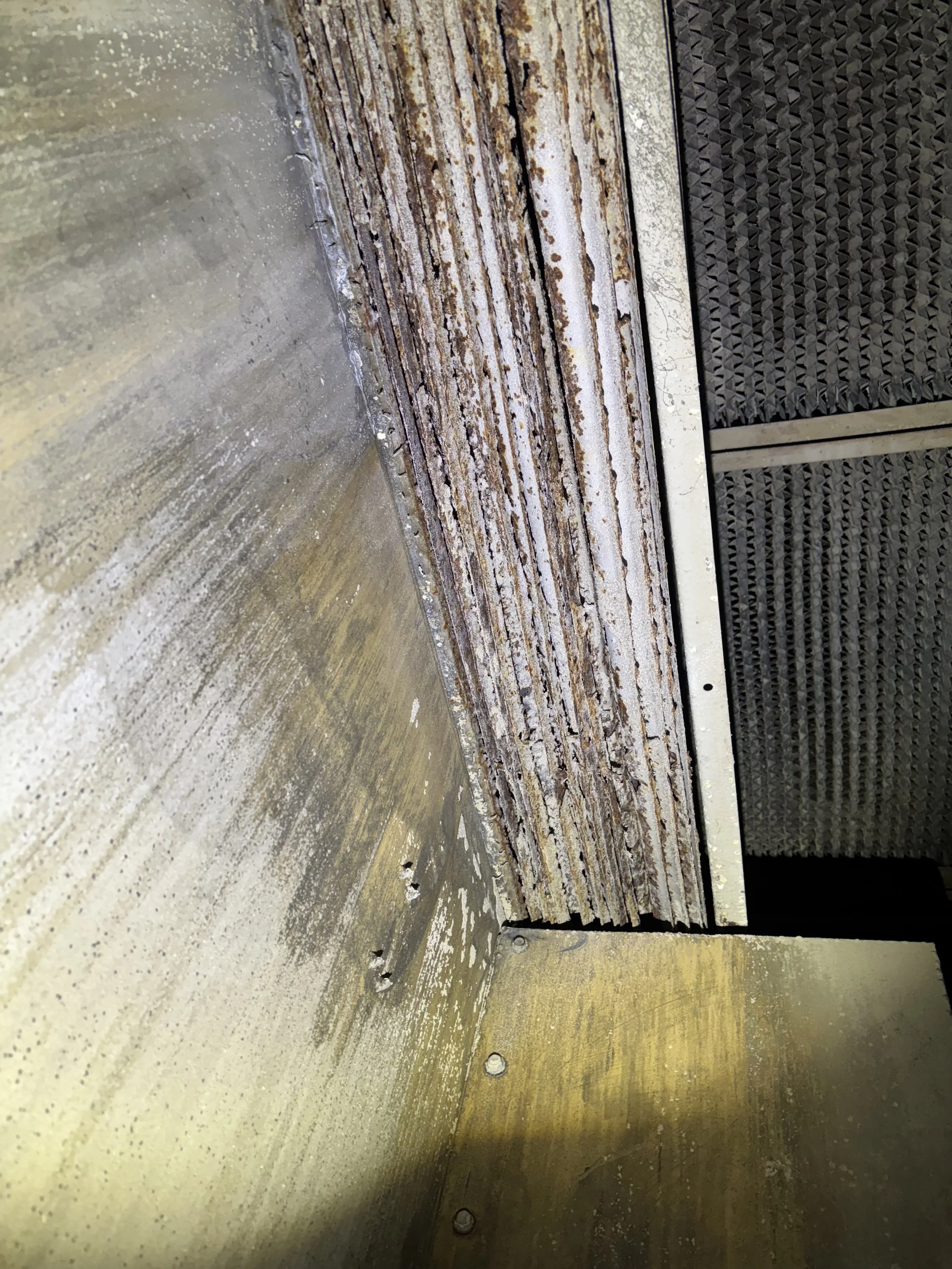
Visual inspection of the cooling tower was never done
It was unclear if corrosion coupons were reported back or not
The closed loop had no filtration
There were no immediate problems like serious scale or corrosion
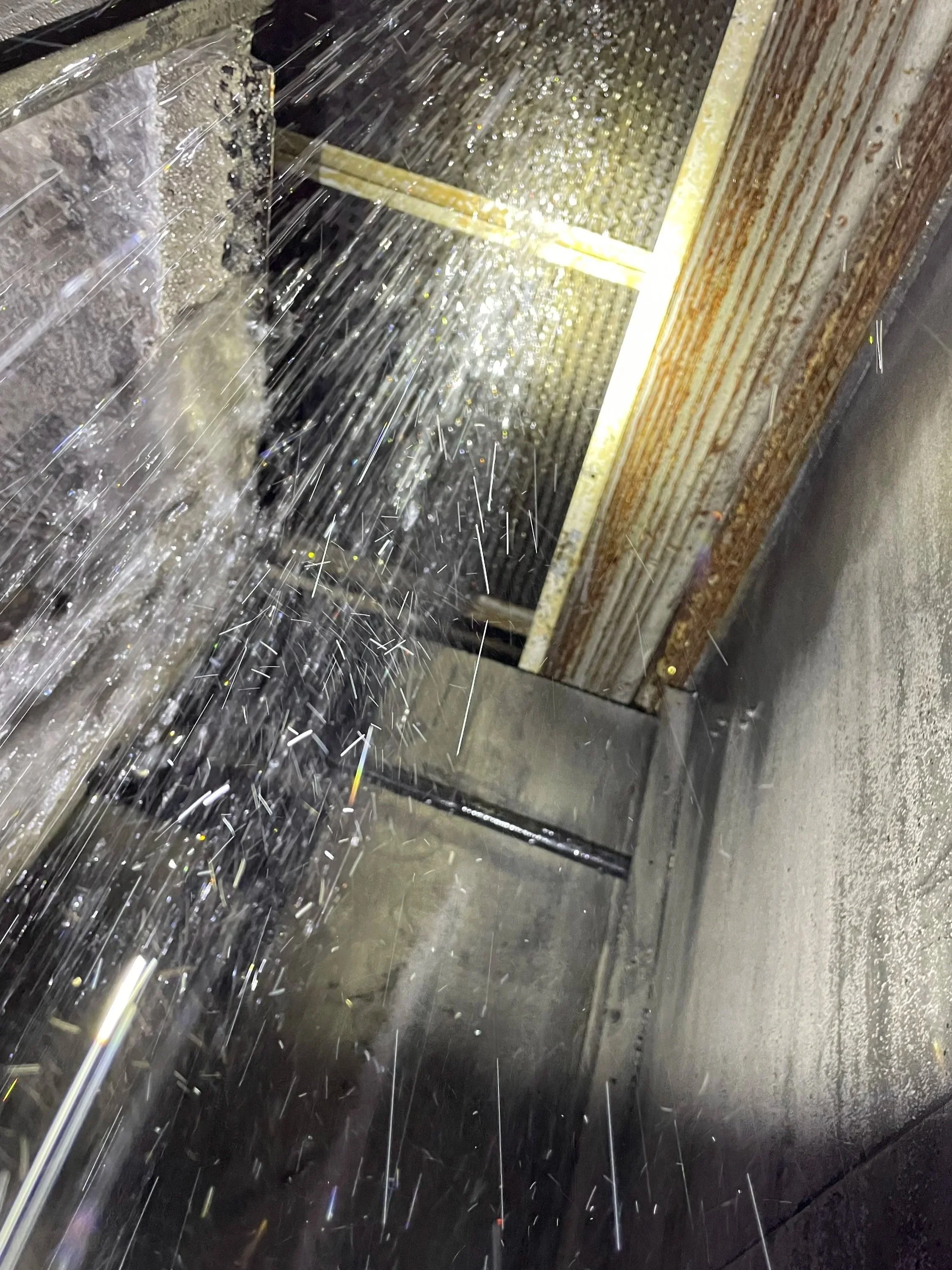
Internal of the Cooling Tower- No immediate issues, some light scale/corrosion
An in-depth analysis of the water showed a few interesting tidbits:
It didn’t appear as there was much inhibitor chemistry in the cooling tower.
The copper was slightly higher than expected- .11ppm. This is pretty low for some closed loops, but on this sort of system, 10,000 gallons of chilled water with mostly mild steel connections and the only copper is inside heat exchangers, I want a very tight bandwidth
Chicago water Treaters was awarded the contract. It was our 4th customer. Those days of building were tough. (Brian) had a 3 year old, and a decision had to be made pretty quick to whether this company he was starting was going to be profitable enough or he needed to call it quits and just go to another company. Here’s what we found in the next few months:
We put filtration on the closed loop and boosted the azole concentration. Azole is the shorthand name for either tolytriazole or benzotriazole. It’s usually added as part of your closed loop chemical mixture and most agree that 5ppm or greater should be sufficient. Sometimes it’s not though. This is why it’s so important to look at both sides of an inhibitor package. Look at the inhibitor, ask what it’s supposed to do, like keep hardness in suspension or stop iron corrosion, then test for that too. The filtration presented a challenge as the building has over 200PSI in the basement. It’s not ideal, but we decided to put the filtration on the upper floors.
Filtration helps on a physical, easy to understand level. If I were to throw sand into a closed loop system, it’s going to start creating gouges in the piping. It will attack areas that reduce in flow, softer metals, and reductions in pipe size. This type of corrosion is known as “erosion corrosion”, similar to how a mountain canyon is cut with a river.
After that, copper dropped down to below detectable, consistently.
On the cooling tower, we noticed that the chemistry occasionally didn’t prime right. We replaced all the fittings, something that probably had never been done, and we haven’t had problems since then, almost two years ago. We now know that chemistry was feeding occasionally under the previous water treatment contractor.
Overall, would there have been huge shutdowns? Probably not. But the customer is now paying roughly the same and getting much better service. That’s the Chicago Water Treaters goal. Pictures, taken 2 seasons later, show a bunch of those deposits in the tower have started to dissipate.